
Original posts –
Eight security posts and a marathon at Harvest
Harvest makes time-tracking and invoicing software. I joined the remote team in 2016 as its first security engineer. Most days we worked together online. A couple of times a year we met in person at a company retreat we called Summit. Between 2016 and 2019 I wrote eight posts about security for Paperboy, our internal bulletin board, and one about my week in Madrid. Twice I was optimistic enough to put a prediction in writing. One involved the bug bounty inbox. The other involved my legs.
-
Security program changes
After a year of handing out T-shirts and “our infinite gratitude,” we were opening the bounty program to everyone. Cash rewards would start at $100. We ran the program on HackerOne, where researchers could send us a report, discuss it with us and collect a reward. Their support team reckoned we could get 150–200 reports in the first 48 hours. I put my own forecast in writing.
“I believe that it’s going to be way less (a guess).”
-
Security program: one week later
We got about 100 reports in eight hours and 240 in the first 48. At one point a new one arrived every two or three minutes. I needed at least ten minutes to check most of them. Meanwhile a scanner had discovered our support form and was enthusiastically contacting Support. Lorenzo Planas, one of the developers helping me handle the reports, added a field people couldn’t see. The scanner filled it in every time, which let us filter out its messages before they reached Support.
-
Security program: first 111 days
We eventually worked out part of the reason for the rush. Harvest had been at the top of HackerOne’s company list when its Hack the World contest kicked off. By day 111 we’d received 791 reports, resolved 89 bugs and paid $20,900 in bounties.
My favorite $1,000 went to Alexey Leonov. He had zero reputation on HackerOne and said an ordinary user could make themselves an administrator. He was right. Albert Llop fixed it on a porch at our Summit in Mohonk. Two of our other developers, Zach Moazeni and Julia López, happened to be on the porch too. They reviewed Albert’s change right there.
-
We are moving to 1Password Teams
Our shared vaults had synced through Dropbox since 2014. Then we had to recover passwords from an old copy of a vault. Warwick Poole, who worked on our infrastructure, suggested trying 1Password Teams. After two weeks of testing, the feature I wanted was wonderfully boring: each item had its own history. Recovering yesterday’s password would no longer mean digging out yesterday’s vault. Our Linux users also got a web app and could finally retire the emulation workaround.
-
ADITL: Jorge
For Paperboy’s “A Day in the Life” series, we took turns sharing a week in photos. Mine started with the Madrid Marathon. I’d convinced myself the warm-up jog before the gym counted as “a kind of sous-vide long distance running training.” I finished, went home for pizza, went out again for the Pinta Malasaña street-art festival, and had my third lunch in a Mexican bar. On Monday my third-floor apartment acquired a new feature: three floors of stairs and no lift.
By Wednesday Rosa and I were making a caramel pear crumble cake. My contribution, as recorded for posterity: “we served it with mascarpone ice cream, which I bought. I did that very well.”
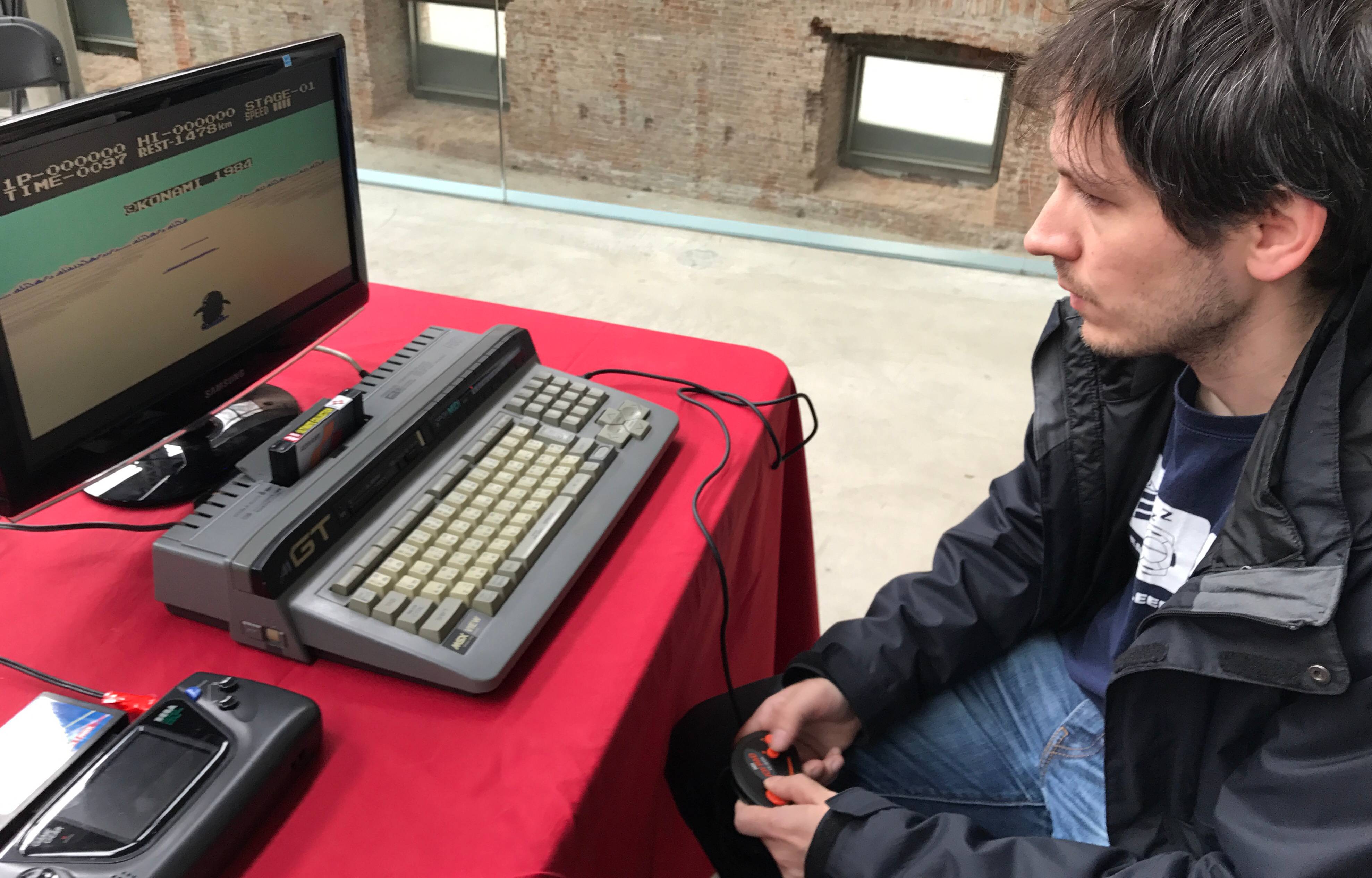
RetroMadrid, 2017. My first computer was an MSX, one of a family of home computers from the 1980s. I shared ours with my aunt and my brother. It had been about 25 years since I’d played Antarctic Adventure. -
Keeping macOS secure
I said I’d send a private reminder a month after a patch came out, sooner for a critical one. I could already hear the question: “How do you know who is not updated? Are you spying on us?” In 2017 the browser sent its macOS version when someone visited Harvest. That was enough to spot an old version in our logs. It could also be someone borrowing a computer for the afternoon, which is why the reminder went to them privately.
-
Summit security curse: BCrypt password leak
At our autumn Summit, just before we left for Barcade, a researcher reported that our API was returning password hashes. A hash is the value we store to check a password at login. Someone with a copy could test guesses against it, even after we fixed the bug. I checked the report, found the others in the kitchen, and in under an hour we’d stopped returning the hashes. Then came the awkward part. The endpoint had been getting about 40,000 requests a day for five weeks. Any copies that had reached somebody else’s logs could still be there.
The next day we counted 44,700 affected users at 1,390 companies. We decided to tell the customers and require password resets. When I wrote the post, that work was still ahead of us.
-
1Password features
A year after the move, we could keep one-time codes alongside logins, and family accounts gave people somewhere to put personal passwords under their own email. The question we’d already fielded a few times was what to do on a new computer when you couldn’t find the account key. A teammate could start account recovery. That answer deserved to live somewhere you could read it while locked out of 1Password.
-
Better second factor authentication with YubiKeys
I’d been trying a hardware key with Google and GitHub. A convincing fake login page could talk me into typing a six-digit code. With the key, the browser checked which site was asking. The question in the post was “What if I lose the key?” In our setup I could still sign in with the existing second factor and revoke the missing key. The big purchasing decision in 2019 was whether my future self would need a Lightning connector.